Source European Truck Cabin Condenser for Kenworth, Ford, and Mercedes
Find 30 european truck cabin condenser options from Zhejiang and Guangdong suppliers. Compare aluminum air-cooled units for Kenworth, Ford, and Mercedes-Benz Euro 2 trucks. Check models like 9240828 and ES-C109 for repair and replacement needs; compare the available evidence and request quotations based on your requirements.
Key considerations
Products List






Comprehensive Sourcing Guide
European Truck Cabin Condenser Sourcing Guide
Sourcing a European truck cabin condenser for aftermarket replacement or fleet repair requires buyers to balance fitment accuracy, material quality, and commercial flexibility. Cabin condensers are a wear item in heavy-duty air-conditioning systems, exposed to road debris, vibration, and thermal cycling, which makes consistent quality essential for repeat business. Suppliers in this category typically serve repair shops, parts distributors, and fleet maintenance programs, so the buyer's first decision is defining the target vehicle range and replacement purpose before approaching vendors.
This guide walks through the full evaluation sequence: interpreting product listings, verifying technical specifications, checking documentation, understanding cost structures, qualifying suppliers, and planning long-term procurement. The framework relies on the attributes observed in current B2B listings for this category, including aluminum construction, new condition, replace/repair purpose, and available customization. Buyers should treat listing attributes as starting observations rather than verified claims, and use each section below to convert those observations into concrete questions asked before an order is placed.
Product Scope and Observed Listing Signals
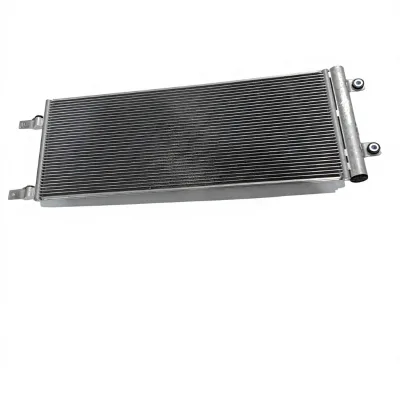
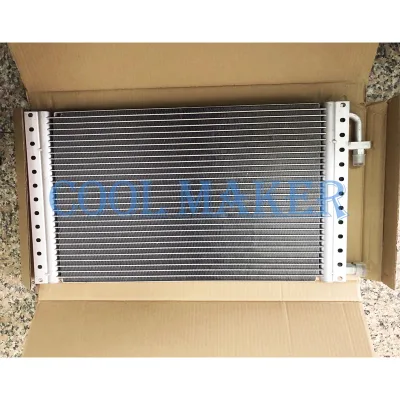
Listings for truck cabin condensers observed in this category show several recurring signals. The products are positioned as new, single-deck, air-cooled aluminum condensers intended for replace or repair purposes, sold as single items. Brand names such as Bullhorse and COOL MAKER appear, with origins in Zhejiang and Guangdong, China, including Wenzhou and Guangzhou. Reference numbers like 2015914 and model identifiers such as 9240828, 9240702, 9241000, 9240552, 9260117, 9240829, ES-C109, and ES-C090 appear in the data. Application fields list International, International Lonestar, Kenworth, Ford, and M.Benz Truck Euro 2, alongside universal truck condenser references.
Buyers should read these signals carefully. The presence of European truck applications (M.Benz Truck Euro 2) alongside North American nameplates suggests mixed-vehicle catalogs, so a listing titled for one application may cover several, and the opposite. Core keyword relevance sits with the M.Benz Truck Euro 2 and universal fitments. Confirm whether the model number corresponds to the buyer's specific chassis and year, and request the OE cross-reference, since the oe_no field observed (12X23X20) appears to be a dimension rather than an OEM number.
Technical Specifications to Verify
The primary verification task is dimensional and fitment accuracy. One universal listing cites a size of 25×20×20 CM and the observed oe_no value of 12X23X20 suggests core dimensions drive compatibility. Buyers should request core width, height, and thickness, tank and inlet/outlet positions, port sizes and thread types, fin density, and mounting bracket locations. A condenser that matches the OEM number but differs in port orientation or bracket spacing will fail at installation, so ask for engineering drawings or measured drawings rather than catalog photos before committing to tooling or first orders.
Beyond fitment, verify construction details that affect service life. Listings state aluminum material and air-cooled condensation form, but buyers should clarify whether tubes are extruded micro-channel or tube-and-fin construction, how tanks are joined (brazed versus mechanical), and what leak-testing each unit undergoes before shipment. For the M.Benz Truck Euro 2 application, confirm refrigerant compatibility with the vehicle's original system specification. Where customization is offered — several listings explicitly state goods can be produced to the buyer's design — ask whether customization extends to core dimensions, tank design, and packaging, and what minimum volumes apply.
Compliance and Safety Documentation
Documentation discipline starts with distinguishing what a listing asserts from what a supplier can evidence. Observed listings include an ISOCE certification field and Euro fuel emission-standard attributes, but buyers should not treat these text fields as verified compliance. Request the actual certificate copies, confirm the certifying body, and check that the certificate scope covers condensers rather than unrelated product lines. Note that emission standards apply to the vehicle, not the condenser itself, so a listing's Euro 2 reference likely describes the donor vehicle class rather than a product approval the buyer can rely on.
Because refrigerant circuits operate under pressure and are handled by professional technicians, documentation should also cover pressure-test records, leak-test methods, and material traceability for the aluminum stock. Ask whether each batch is tested and whether test reports can accompany shipments. For European-market resale, clarify with the supplier which declarations they can provide regarding refrigerant contact materials and packaging compliance, and identify which obligations fall to the importer. A supplier who can produce batch-level test documentation on request is materially lower risk than one who offers only marketing claims, even if the on-paper attributes look identical.
Cost Drivers and Commercial Terms
Observed listings show a wide price band from roughly $1.19 to $6,000 across the category, which reflects mixed product types rather than a true price range for a single condenser. Realistic unit pricing depends on core size, construction type, brand positioning, and order volume. Observed MOQs range from 1 to 200 pieces, and at least one listing states a 1-piece MOQ, which is valuable for sample validation. Delivery time is stated as 30 days in the data, so use that as a benchmark and confirm whether it applies to stocked items only or includes customized production runs.
Negotiate the full commercial package rather than the unit price alone. Key levers include packing specification (listings show carton and pallet packing, one set per carton box, and neutral or Asia packing options — neutral packing matters for distributors building their own brand), incoterms and who arranges freight, payment terms tied to inspection acceptance, and warranty handling. One listing simply states "warranty: yes" without terms, so define in writing what defects are covered, the claim window, required evidence such as photos or returned samples, and whether remedies are credit, replacement, or repair. Customization availability is a pricing variable too: buyer-specific designs may carry tooling or lower-volume surcharges that should be quoted explicitly.
Supplier Qualification and Quality Control
Qualify suppliers through evidence rather than listing claims. A practical sequence: request business license and export history, ask for the certification documents mentioned earlier, and order samples against a written specification sheet covering dimensions, materials, and leak-test criteria. Compare the sample's measured dimensions against the drawing, inspect brazing quality and fin condition, and pressure-test the sample before approving it for volume. Suppliers offering customization "as your design" should be asked how design changes are documented and version-controlled so repeat orders reproduce the approved sample.
For ongoing quality, define an inspection protocol proportionate to order size. Useful elements include incoming material certificates, in-line leak testing with a documented method, finished-goods AQL sampling per shipment, and dimensional checks against the approved drawing. Consider whether third-party pre-shipment inspection is warranted for larger orders, especially when buying from a new vendor. Track defect rates by batch and maintain a corrective-action loop: a supplier's willingness to investigate root causes — for example, a leak attributed to braze porosity — is a better reliability indicator than any certificate. Keep an approved-sample record and reference it on every purchase order to prevent silent specification drift.
Long-Term Procurement Checks
Plan procurement as a relationship with scheduled checkpoints rather than one-off transactions. Review supplier performance annually across on-time delivery against the stated 30-day benchmark, defect and claim rates, communication responsiveness, and price stability. Re-confirm that certifications remain current and that any certificate renewals or scope changes are communicated. If the supplier ships under neutral packing for your brand, audit packaging quality periodically, since damaged cartons and condenser fins in transit are a common source of avoidable claims in this product class.
Build resilience into the supply plan. Because several observed listings carry multiple model numbers (9240702, 9241000, 9240552, 9260117, 9240829, ES-C109, ES-C090), consolidate volume where one vendor genuinely covers multiple SKUs, but avoid single-sourcing critical fast-moving part numbers without a qualified alternate. Monitor vehicle-parc trends for the applications you serve — an aging Euro 2 truck fleet has different demand dynamics than newer platforms — and adjust stock depth accordingly. Finally, keep specification drawings, approved samples, test reports, and warranty claim histories in a shared file so that personnel changes on either side do not reset quality progress or restart qualification from zero.
FAQs
What is the condition of the european truck cabin condenser?
The product condition is new, ensuring immediate readiness for installation without prior usage wear. These units are designed for replacement or repair purposes on various truck models. They are manufactured with aluminum materials to provide durability and efficient heat exchange performance for heavy-duty applications.
Which truck brands are compatible with this condenser?
This condenser is compatible with International, Kenworth, Ford, and M.Benz Truck Euro 2 models. It serves as a universal replacement part for various heavy-duty vehicles. The specific application ensures broad utility across different international truck brands requiring cabin cooling system repairs.
Can I customize the european truck cabin condenser specifications?
Yes, customization is available to meet specific customer design requirements. Manufacturers can produce goods according to your unique design specifications. This flexibility allows buyers to tailor the product to exact operational needs while maintaining the core aluminum construction and air-cooled condensation forms.
What is the lead time for delivery of this product?
The standard delivery time for this product is 30 days from order confirmation. This timeline applies to the production and shipping process for the condenser units. Buyers should plan their procurement schedules accordingly to ensure timely arrival of the new replacement parts for their fleet.
How is the european truck cabin condenser packaged for shipping?
The product is packed in cartons and pallets for secure transport. Some variations come as one set in one carton box with neutral or Asia packing options. This packaging ensures the aluminum condenser units remain protected during international shipping to various global destinations.
What certifications does the european truck cabin condenser hold?
The product holds ISOCE certification, indicating compliance with specific quality and safety standards. This certification supports the reliability of the condenser for commercial truck applications. Buyers can rely on these certified units for meeting regulatory requirements in international markets.
What is the minimum order quantity for this condenser?
The minimum order quantity is one piece, allowing for flexible purchasing options. This low MOQ enables buyers to test the product or replace single units without bulk commitments. It supports both small-scale repairs and larger fleet maintenance needs effectively.